
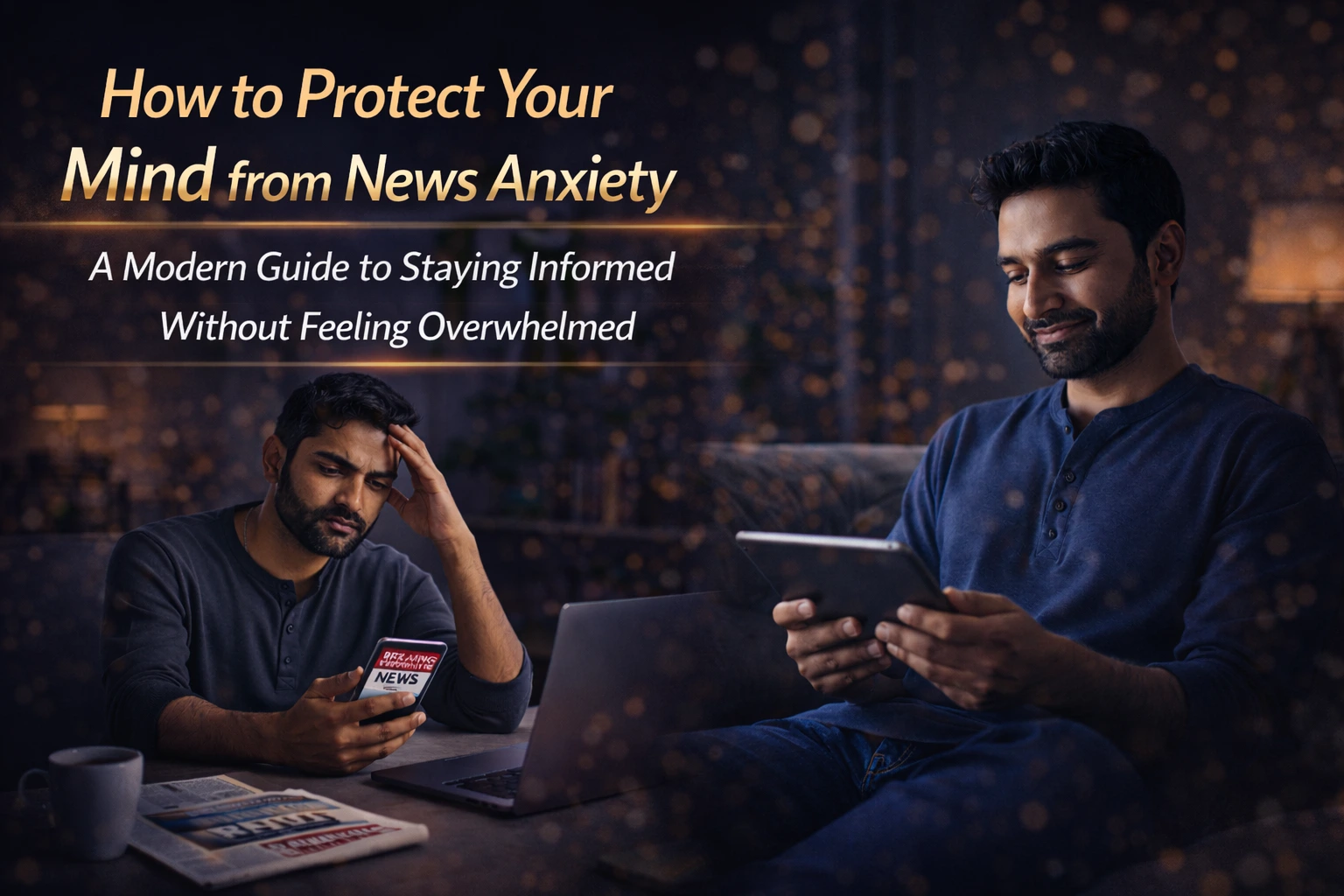
How to Protect Your Mind from News Anxiety: A Modern Guide to Staying Informed Without Feeling Overwhelmed
news anxiety
news anxiety
news anxiety
Introduction
news anxiety
We live in a world where information moves faster than our brains can process it. With smartphones buzzing, push notifications lighting up screens, and social platforms feeding us a constant stream of updates, staying informed often feels like drowning in an endless flood.
The problem isn’t information itself — it’s overexposure to negative news and relentless media consumption, which can stress the mind, trigger anxiety, and leave you emotionally drained. This experience — sometimes called news anxiety or headline stress disorder — is becoming increasingly common in today’s hyperconnected era.
This article isn’t about disconnecting from the world entirely. It’s about protecting your cognitive and emotional health while still keeping up with what matters. Below is a modern, practical guide to help you stay informed without feeling overwhelmed — backed by real expert strategies and psychological insights.
Understand Why News Feels Overwhelming
Before we jump into solutions, it’s important to understand why this happens.
Human brains are wired to pay attention to negative information — a concept psychologists refer to as negativity bias. This tendency helped our ancestors survive danger, but in the digital age it works against us. Platforms and news outlets often exploit this bias by promoting emotionally charged headlines, because negativity drives engagement and keeps you scrolling.
Additionally, constant alerts and updates can lead to continuous partial attention — a state where your focus is divided and shallow. Rather than deeply processing information, you constantly scan for anything new, which increases stress and reduces your ability to concentrate on the present moment.
So staying informed isn’t bad. The problem arises when your mind is in overdrive, trying to process more than it can handle.
reduce news stressnews anxiety news anxiety news anxiety media overload mental health media overload mental health doomscrolling and anxiety information overload coping strategies information overload coping strategies
Set Intentional News Boundaries
Your brain did not evolve for 24/7 global chaos, yet most of us start our day by checking notifications first thing in the morning. That’s setting your mind straight into stress mode.
Actionable Boundaries:
- Don’t check news within 30–45 minutes of waking up.
- Reserve a specific time for news (e.g., 11 AM and 7 PM) instead of random scrolling throughout the day.
- Avoid news at least an hour before bedtime to protect sleep cycles.
These routines help reclaim your cognitive energy and reduce anxious reactions triggered by reactive media consumption.
Limit News Exposure — Don’t Let It Rule Your Day
Experts recommend setting structured limits on news intake. When you consume news without boundaries, it becomes automatic and reactive rather than purposeful.
Here’s how to make that work:
- Decide on a daily news time limit (e.g., 30 minutes total).
- Choose just one or two reliable news sources.
- Turn off push notifications from news apps.
This kind of intentional news filtering gives you control rather than letting media hijack your attention and emotions.
Choose Balanced Sources (Trustworthy > Sensational)
Not all news is created equal.
Scrolling news feeds or social media exposes you to:
- Exaggerated headlines
- Half-truths
- Emotional opinions framed to trigger reactions
- Graphic or fear-based content
These elements play on your brain’s survival wiring and escalate stress, even when you think you’re just staying informed.
Better approach:
- Curate 2–3 trusted, balanced sources (e.g., well-established news outlets).
- Avoid random feeds and suggestive headlines that aim for attention, not understanding.
When your news is calmer and more factual, your mind doesn’t go into threat mode.
Recognize and Break “Doomscrolling” Habits
There’s a name for that compulsive behaviour of scrolling through negative headlines: doomscrolling. It refers to consuming bad news endlessly, often in hopes of finding reassurance — but it ends up increasing anxiety instead.
How it affects you:
- Increases stress and emotional fatigue
- Reinforces negative thought loops
- Makes you feel mentally heavier and overwhelmed
Break the pattern:
- Ask yourself before scrolling: Why do I want to read this?
- Limit session times (use a timer if needed).
- Move straight to a non-news activity after news exposure.
These habits reduce emotional overload and help your brain stay balanced.
Practice Mindfulness and Micro-Breaks
Mindfulness isn’t reserved for long meditation sessions — it can be a series of micro-moments that reset your nervous system throughout the day.
Scientific studies show that even brief moments of pause or reflection can help calm the nervous system and reduce stress responses, giving your brain a chance to reset and improve focus.
Micro-Mindfulness Techniques:
- Take 3 deep breaths before and after checking the news
- Close your eyes and focus on sensations for 60 seconds
- Inhale deeply for 4 seconds, exhale for 6
These quick resets help reduce emotional reactivity and protect your mental equilibrium.
Replace Negative Consumption with Positive Engagement
Consuming bad news without balance distorts your view of the world. To counteract this, consciously seek out uplifting or solutions-focused information.
Try:
- News summaries that highlight progress
- Stories of innovation, kindness, and resilience
- Scientific discoveries or community success stories
Balancing the news you consume doesn’t mean ignoring reality — it means feeding your brain realistic perspectives instead of just perceptions of threat.
Engage in Grounding and Self-Care Activities
Even with healthy media habits, some news will still trigger stress — that’s normal. What matters is how you reset afterward.
Effective grounding activities include:
- Going for a walk outdoors
- Listening to music or nature sounds
- Journaling your thoughts
- Breathing exercises
These focus your body and mind on the present moment, reducing the lingering emotional impact of distressing information.
Protect Your Emotional Space Online
Your digital environment shapes your psychological state.
Digital filtering tips:
- Unfollow or mute accounts that drain emotional energy
- Follow pages dedicated to mental health, well-being, or calm news
- Set screen-time limits on social media and news apps
By shaping what you see online, you’re creating a safe and supportive information space rather than a stress-triggering one.
Build Real Human Connections
Human connection — talking, listening, sharing — is one of the most evidence-based ways to protect emotional well-being. Even strong social relationships act as buffers against stress and anxiety triggered by overwhelming news.
Make time for:
- In-person conversations
- Phone calls with loved ones
- Group activities that make you feel grounded
These interactions remind your brain that the world is more than headlines.
Know When to Seek Support
If you notice persistent anxiety, sleep disturbances, or overwhelming emotional responses even after adjusting your news habits, it might be time to speak with a mental health professional.
Therapy, cognitive strategies like metacognitive therapy, and guided counseling can help restructure how your mind responds to stressors — including media anxiety.
You Don’t Have to Disconnect — Just Reclaim Your Mind
News is a tool, not a master.
When you set healthy boundaries, curate sources intentionally, and practice mindful consumption, you stay informed without neurological exhaustion. The goal is not to hide from the world — it’s to stay mentally resilient in a world flooded with information.