
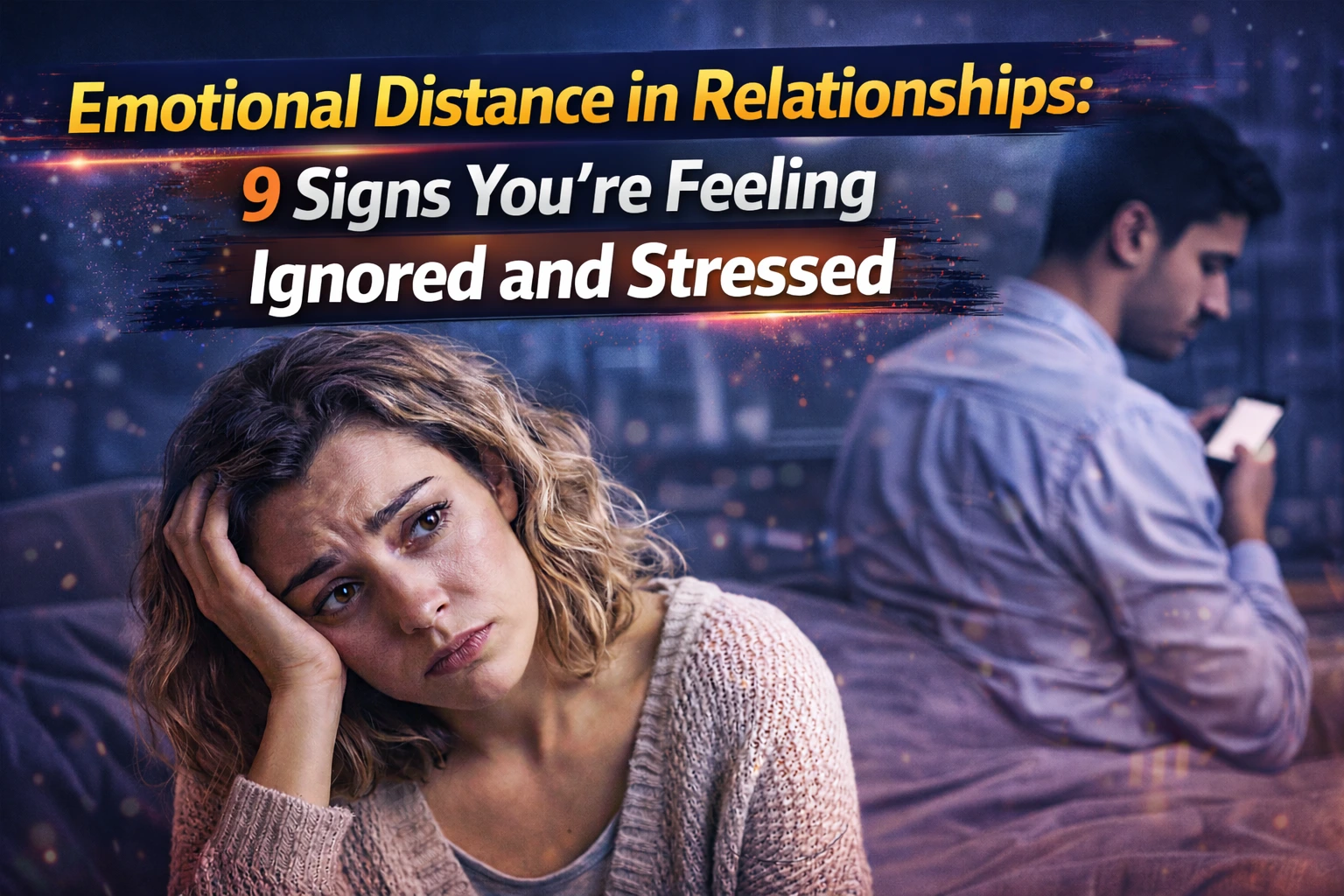
Emotional Distance in Relationships: 9 Signs You’re Feeling Ignored and Stressed
Emotional Distance in Relationships Emotional Distance in Relationships Emotional Distance in Relationships Emotional Distance in Relationships
Introduction
Many people stay in relationships but still feel lonely. You talk daily. You live together. Yet something feels missing. This feeling is called emotional distance in relationships. It creates stress, confusion, and emotional pain.
You may feel ignored, unheard, or emotionally disconnected. You might blame yourself or think something is wrong with you. But emotional distance is more common than you think, especially in Indian relationships where work pressure, family duties, and emotional silence are normal.
This blog will help you understand why emotional distance happens, how to recognize the signs, and what you can do to feel emotionally close again without forcing love or creating fights.
What Is Emotional Distance in a Relationship?
Emotional distance means you and your partner are no longer emotionally connected. You may still care, but emotional closeness feels weak. Conversations feel shallow. Feelings are not shared openly.
This distance does not always come from anger or fights. Often, it grows silently over time due to stress, poor communication, or unmet emotional needs.
Why Emotional Distance in Relationships Is Increasing in India
Modern life is fast and stressful. Long working hours, financial pressure, and family expectations reduce emotional availability.
Many people are taught to hide emotions. They believe love means responsibility, not emotional presence. Over time, this creates emotional gaps between partners. These gaps slowly turn into emotional distance.
1. You Feel Ignored Even When You Are Together
You sit next to your partner, yet feel alone. They are physically present but emotionally absent. This is one of the strongest signs of emotional distance in relationships.
2. Conversations Feel Forced or Meaningless
You talk about daily tasks but avoid deep topics. Emotional conversations feel uncomfortable or end quickly. This often leads to communication problems in relationships.
3. You Stop Sharing Your Feelings
You think twice before speaking. You fear being misunderstood or ignored. Slowly, you stop expressing emotions to protect yourself.
4. Small Things Start Stressing You More
Little actions hurt deeply. Late replies. Cancelled plans. Lack of attention. Emotional distance increases relationship stress over time.
5. You Feel Emotionally Tired and Drained
You feel exhausted without knowing why. Emotional effort feels one-sided. This emotional tiredness is linked to emotional attachment issues.
6. Trust Issues Begin to Surface
When emotional closeness fades, trust weakens. You may start doubting intentions or overthinking behavior. This leads to having trust issues in relationship dynamics.
7. You Avoid Spending Quality Time Together
Time together feels awkward. Silence feels heavy. You prefer distractions instead of connection.
8. You Feel More Lonely Than Before
Ironically, emotional distance hurts more when you are in a relationship. Feeling ignored in relationship situations deeply affects emotional health.
9. You Miss How Things Used to Be
You often think about the past. You miss emotional warmth. This nostalgia is a clear sign that emotional distance has grown.
When emotional needs are unmet, the mind stays alert. You overthink. You feel anxious. You doubt yourself.
This constant emotional pressure creates relationship stress. It affects sleep, mood, confidence, and emotional stability.
Connection Between Emotional Distance and Trust Issues
Emotional closeness builds trust. Distance breaks it.
Without emotional openness, misunderstandings grow. This is why people start searching for how to fix trust issues in relationship or how to overcome trust issues in relationship.
Why Communication Problems Make Emotional Distance Worse
Silence does not protect relationships. It damages them.
Avoiding conversations increases emotional gaps. Healthy communication heals emotional distance when done with safety and empathy.
How to Avoid Relationship Stress Caused by Emotional Distance
Awareness is the first step. Accept the problem instead of ignoring it.
Creating emotional safety allows honest conversations without blame or fear.
Simple Ways to Reduce Emotional Distance in Relationships
Small consistent efforts matter more than big gestures.
Emotional presence, listening without interruption, and validating feelings help rebuild emotional closeness naturally.
How to Deal With Trust Issues in a Relationship
Trust heals slowly. It needs patience and honesty.
Instead of blaming, focus on understanding emotional wounds. This approach works better than arguments or control.
Real-Life Example
A working couple in Delhi felt emotionally distant after marriage. Long work hours reduced communication. They felt stressed and disconnected.
Through emotional awareness and counseling, they rebuilt emotional connection without changing their lifestyle drastically.
When Professional Support Can Help
Sometimes emotional patterns run deep.
Counselling helps identify emotional blocks and rebuild connection safely. It supports emotional clarity and stress relief.
Conclusion: Emotional Distance Is a Signal, Not the End
Emotional distance in relationships does not mean love is over. It means something needs attention.
Feeling ignored or stressed is your emotional system asking for care and understanding. With awareness, communication, and emotional healing, relationships can feel warm again.
You deserve emotional presence, not emotional silence.