
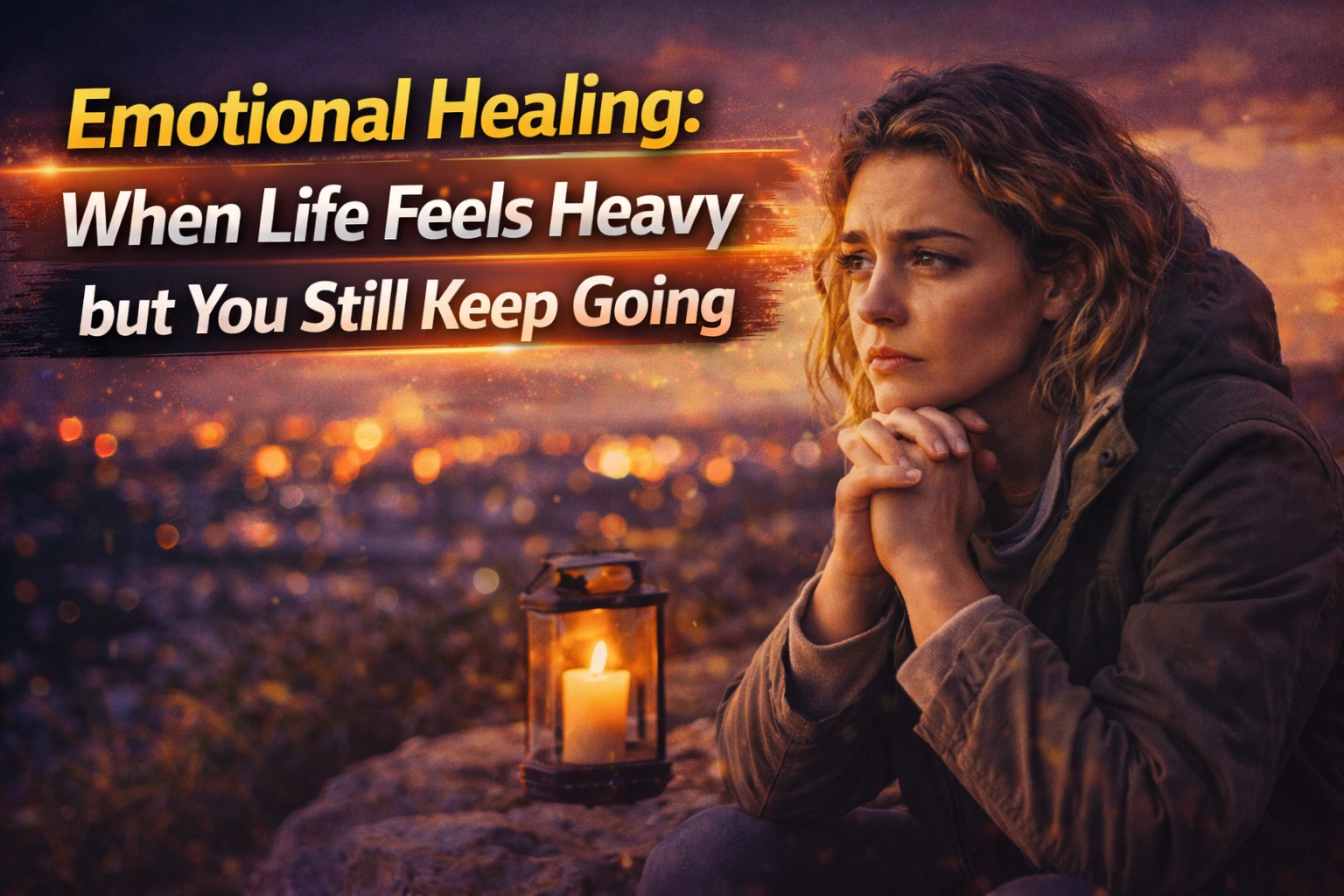
There are days when life feels unusually heavy.
Not because something big happened — but because everything slowly piled up.
You wake up, do what’s expected, talk to people, smile when required…
and still feel tired from the inside.
In India, most of us grow up learning how to adjust, not how to heal.
We’re told to stay strong, ignore emotions, move on quickly.
But emotions don’t disappear just because we don’t talk about them.
That’s where emotional healing quietly becomes important.
Emotional healing doesn’t mean becoming happy overnight.
It doesn’t mean pretending anxiety or sadness never existed.
It simply means allowing yourself to feel, without judging yourself.
It’s about understanding why certain emotions keep coming back.
Why some days feel calm, while others feel heavy for no clear reason.
For many people, emotional healing begins the moment they stop asking,
“Why am I like this?”
and start asking,
“What do I need right now?”
Most emotional pain doesn’t come from one big moment.
It builds slowly.
Over time, this affects mental health in ways we don’t immediately notice.
You might feel irritated for no reason.
Or emotionally numb.
Or tired even after resting.
This doesn’t mean something is wrong with you.
It means your emotions are asking for attention.
Emotional healing and mental health are deeply connected.
When emotions stay unprocessed, they often show up as:
Taking care of mental health isn’t only about fixing problems.
It’s also about creating space where emotions can breathe.
Real healing happens when you allow yourself to feel without a fight.
Anxiety has a quiet way of living in the background.
Even on good days, it stays alert.
You may constantly feel:
This is where anxiety help becomes part of emotional healing.
Healing doesn’t mean removing anxiety completely.
It means learning how to sit with it without fear.
With time, emotional healing supports anxiety relief by helping you feel safer within yourself
Depression doesn’t always look like sadness.
Sometimes it looks like silence.
You go through the day doing everything right,
but nothing feels meaningful.
Seeking depression help is not weakness.
It’s self-respect.
Emotional healing during depression focuses on small steps:
Everyone doesn’t need to know what you’re hurting about.
You just need to stop ignoring it.
Many people struggle with emotional pain because they quietly question their own value.
Self worth is not about achievements or productivity.
It’s about knowing you deserve care even when you’re not at your best.
When emotional healing starts, self worth slowly rebuilds itself.
You stop being harsh with yourself.
You stop measuring your value based on others’ expectations.
(This is where self confidence naturally grows — without forcing it.)
Inner healing is not separate from personal growth.
In fact, growth becomes real only after healing.
Without inner healing:
With inner healing:
This kind of growth feels honest, not exhausting.
Inner peace doesn’t come from perfect situations.
It comes from emotional clarity.
When emotional healing happens, you stop reacting to everything.
You start responding with awareness.
Inner peace feels like:
This is not escape. This is stability.
For many people, guided meditation becomes a safe entry point into healing.
Not because it fixes everything but because it creates stillness.
Guided meditation helps you:
It’s not about controlling thoughts.
It’s about observing them without fear.
Affirmations work best when they feel believable.
Instead of forcing positivity, emotional healing affirmations focus on acceptance.
Simple affirmations like:
These affirmations gently support inner healing without pressure.
Self growth doesn’t always look productive. Sometimes it looks quiet.
Emotional healing teaches you:
This kind of self growth stays with you long-term.
You become emotionally aware, not emotionally guarded.
Sometimes, self-help isn’t enough — and that’s okay.
If emotional pain feels overwhelming, seeking support is a healthy choice.
Healing doesn’t mean doing everything alone.
It means knowing when to allow help.
If life feels heavy right now,
and you’re still showing up every day —
that already says a lot about your strength.
Emotional healing is not about becoming someone new.
It’s about slowly finding your way back to yourself.
And you don’t have to walk this path alone.
If you feel ready to go a little deeper, you can explore our Manifestation Course, designed to help you reconnect with your inner state, release emotional blocks, and move forward with more clarity and intention.
Or, if you prefer personal support, you can book a 1-on-1 session — a safe space to talk, reflect, and begin your healing journey at your own pace.
There’s no rush.
Just the next gentle step — whenever you feel ready.